
Technical Insights
Optimizing Temperature Uniformity and Microstructure: An Engineering Guide to Rolling Mill Water Cooling Systems
Controlled cooling brings mechanical equipment, water regulation and temperature feedback together. For bar and wire rod mills, the objective is to apply the cooling required by the product and keep the process stable as production conditions change.
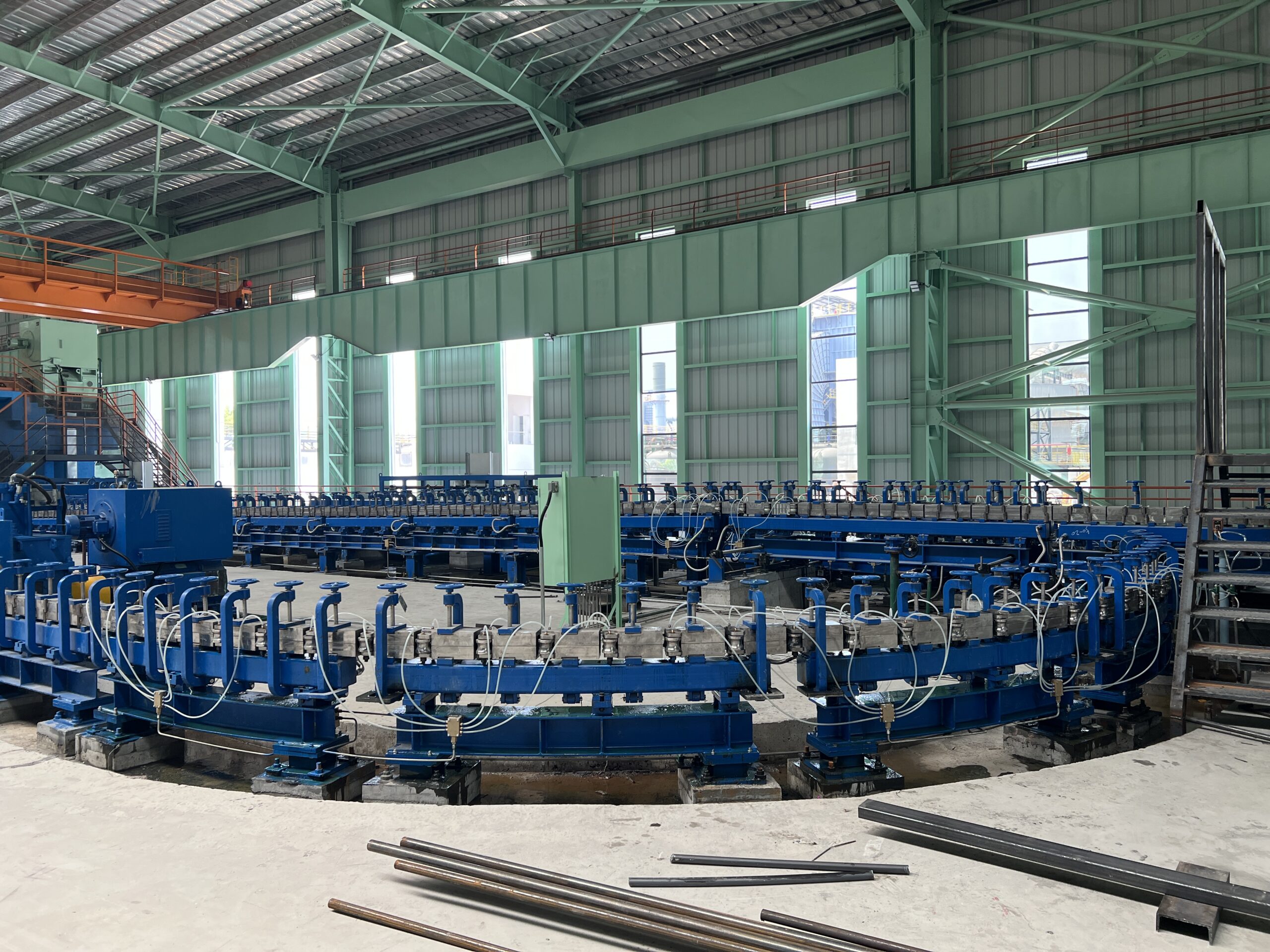
The thermal challenge
Temperature varies with reheating, transfer time, rolling speed and the position along a bar. Uneven water application can add to that variation. The resulting temperature profile influences microstructure and mechanical properties, so the mill needs to evaluate the cooling process alongside the steel grade and rolling schedule.
Water boxes, nozzles and guide troughs
A water box directs cooling water onto the moving product. Nozzle arrangement, water pressure and alignment with the rolling pass line all affect coverage. Guide troughs support the passage of the product through the line and must match the available layout, product sizes and operating conditions. BOYE materials describe annular nozzles configured and water-tested for the application.
From temperature measurement to water control
A closed-loop arrangement uses temperature measurements as feedback to the control system. The controller compares the measured value with the process target and adjusts water delivery through the servo control valve. A servo on/off valve and hot metal detector can coordinate switching with the moving product. The number and position of measuring points and the exact sequence depend on the line design.
What to review before a retrofit
Record the product diameters, steel grades, rolling speeds, available space, pass-line height, water pressure, flow and water quality. Identify existing sensors, PLC interfaces and the maintenance window. A site review should also define the measurement points and the production conditions used to evaluate temperature stability.
Evaluate results under the actual process
Document baseline and commissioning conditions in the same way. Review head-to-tail temperature, product properties and operating records against the agreed targets. Alloy optimisation requires validation of the specific steel grade, chemistry and mechanical properties. Results depend on the complete process and cannot be assumed for another mill.
Discuss your cooling project
Share your product range, line layout and temperature records with the BOYE engineering team.
xjyou@boyeglobal.com ↗